
Chronological Disruptors: The First Art Team and the Re-Evaluation of Paleolithic Symbolism

Introduction: Crossing the Rubicon of the Prehistoric Mind
For over a century, the study of Paleolithic art was governed by an unspoken intellectual dogma: the “Cognitive Rubicon.” Under this framework, the capacity to project the mind onto stone—to translate the three-dimensional, chaotic external world into two-dimensional, symbolic, and abstract graphic codes—was treated as the exclusive, sudden hallmark of anatomically modern humans (Homo sapiens).
This “human exceptionalism” posited a sudden “creative explosion” occurring in Europe roughly 40,000 years ago, coinciding with our species’ arrival on the continent. Neanderthals, though granted a degree of physical and technological competence, were largely cast as cognitive copycats or behavioral primitives, incapable of independent symbolic innovation.
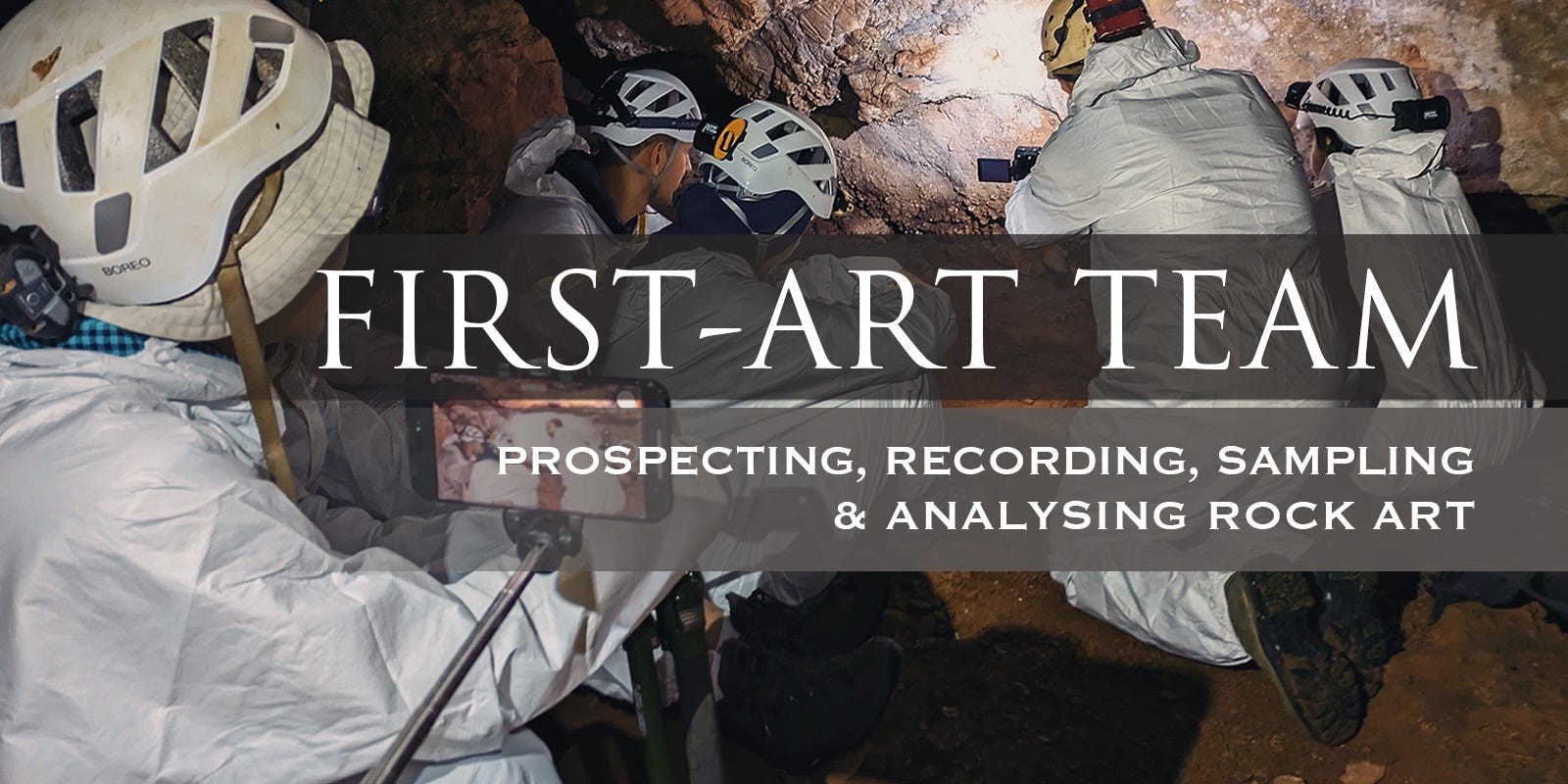
This narrative is now being systematically dismantled. At the absolute vanguard of this scientific and philosophical shift is an extraordinary, multidisciplinary, international research collective known as the First Art Team.
Established as a formal consortium to integrate field archaeology with laboratory-based physical sciences, the team draws its expertise from major academic institutions across Spain, Portugal, Wales, Italy, Germany, and China. Led by the pioneering Spanish prehistorian Dr. Hipólito Collado Giraldo and his long-time collaborator Dr. José Julio García Arranz, this team has brought together world-class experts who refuse to look at cave art through the subjective lens of style. By combining advanced geochronology, high-resolution 3D digital recording, organic geochemistry, and paleogenomics, they have pushed the boundaries of our ancestors’ minds back into deep history.
Their investigations span the coastal cliffs of the British Isles, the deep subterranean chambers of the Iberian Peninsula, and connections extending into South Africa. In doing so, they have demonstrated that the urge to mark, symbolize, and communicate is both far older and taxonomically more diverse than we ever dared to dream.
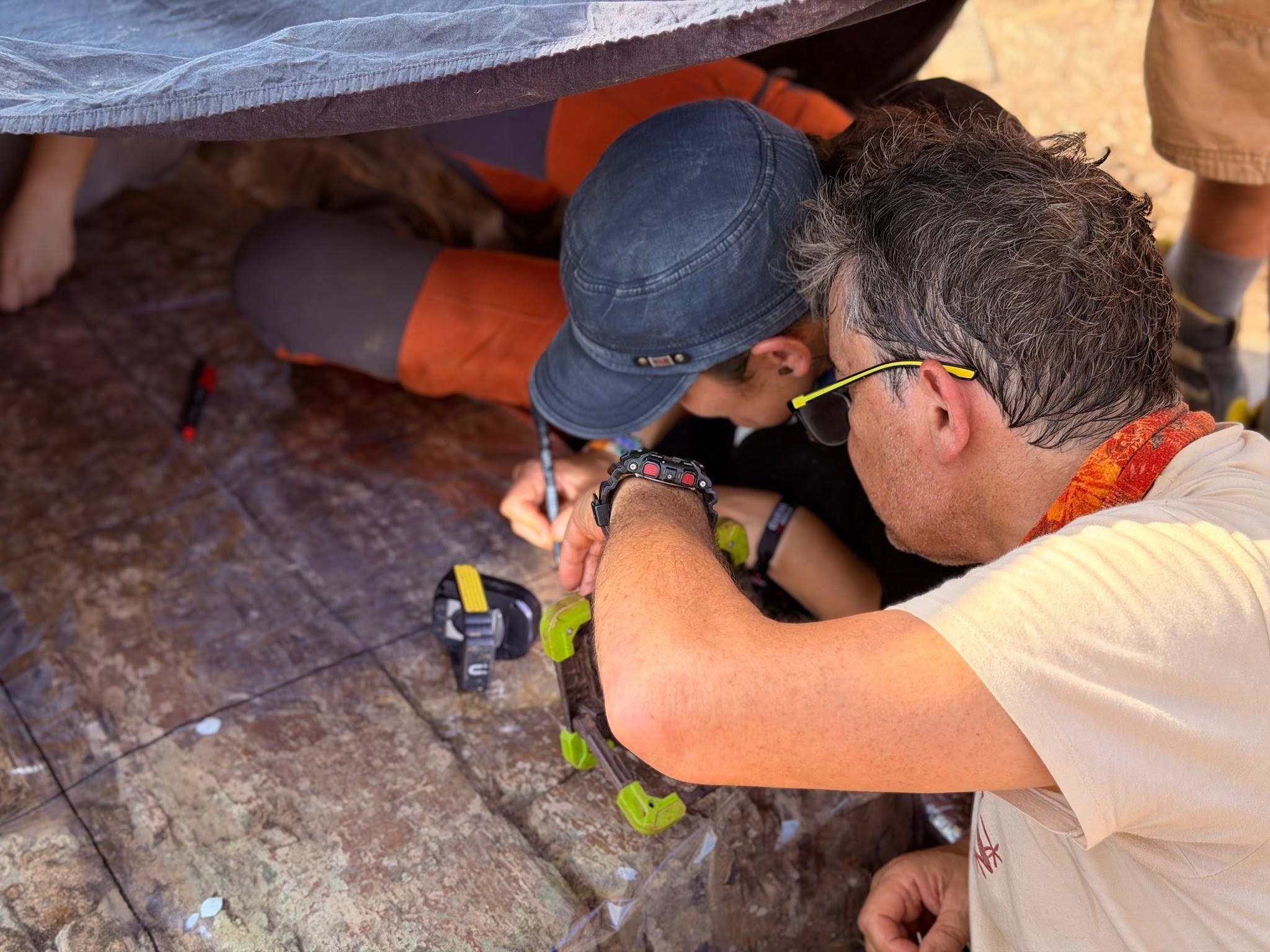
This scientific journey is also deeply personal for me. As a scholar of paleoanthropology, my own Master’s thesis was built upon the theoretical and spatial frameworks established by this very team. I have had the immense privilege of working with them in the field in a limited capacity.
While my field experience has been strictly confined to open-air rock art sites—watching the team set up high-precision photogrammetry rigs under the open sun and discussing the chemical signatures of exposed pigments—it has laid the groundwork for my academic career.
Working with my co-advisors, Dr. George Nash and Dr. Sara Garcés, has been an transformative experience. It remains my ultimate academic dream and active career goal to officially join the First Art Team for my future PhD research, finally expanding my work from the open-air sites I have studied so far into the deep, subterranean cave chambers that hold the earliest secrets of the hominin mind. My vision is to combine my ongoing work on cognitive evolution with their unparalleled field data to study early hominin symbolic expression, helping to resolve one of the deepest mysteries of our lineage: the origin of the symbolic mind.
Context: The Sacred Landscapes of Iberia and Beyond
To understand the magnitude of the First Art Team’s work, one must understand the sites that serve as their laboratories. The team’s research design treats the cave not as an isolated container of art, but as an active node within a broader, deeply lived-in prehistoric landscape. Their primary field campaigns focus on several key regions, each presenting unique geological, taphonomic, and archaeological realities.
Cueva de Maltravieso (Cáceres, Spain)
Located in the urban outskirts of Cáceres, Maltravieso is a key site for understanding the earliest phases of European cave art. Discovered accidentally in 1951 during limestone quarrying, the cave is a complex karst system containing Middle Paleolithic occupation levels, skeletal remains exhibiting trepanation, and, most famously, dozens of negative hand stencils.
The stencils are executed in a distinctive red ochre pigment, primarily concentrated in deep, hard-to-reach chambers like the Sala de las Chimeneas. Crucially, many of these hands exhibit a recurring pattern of “missing” fingers (specifically the pinky and ring fingers), a feature that has sparked decades of debate regarding ritual amputation, pathological frostbite, or—as is increasingly accepted—a sophisticated, pre-verbal gestural sign language used by hunters navigating the silent, acoustic darkness of the deep cave.
Escoural Cave (Alentejo, Portugal)
Discovered in 1963, Escoural is the only known Paleolithic decorated cave in the Alentejo region. The site features an intricate network of galleries displaying a rich sequence of human activity, from Middle Paleolithic Neanderthal stone tool assemblages to Upper Paleolithic rock art, eventually transitioning into a Chalcolithic burial sanctuary.
The art at Escoural consists of both delicate, incised rock engravings depicting classic Pleistocene fauna (such as horses and aurochs) and abstract, non-figurative red painted marks. The site is a key focus for the team’s Portuguese contingent, highlighting the geographic spread of early symbolic behavior across the Atlantic facade.
La Pasiega and Ardales (Northern & Southern Spain)
These two caves, situated at opposite ends of the Iberian Peninsula, provided the explosive geochronological data that shook the paleoanthropological world in 2018.
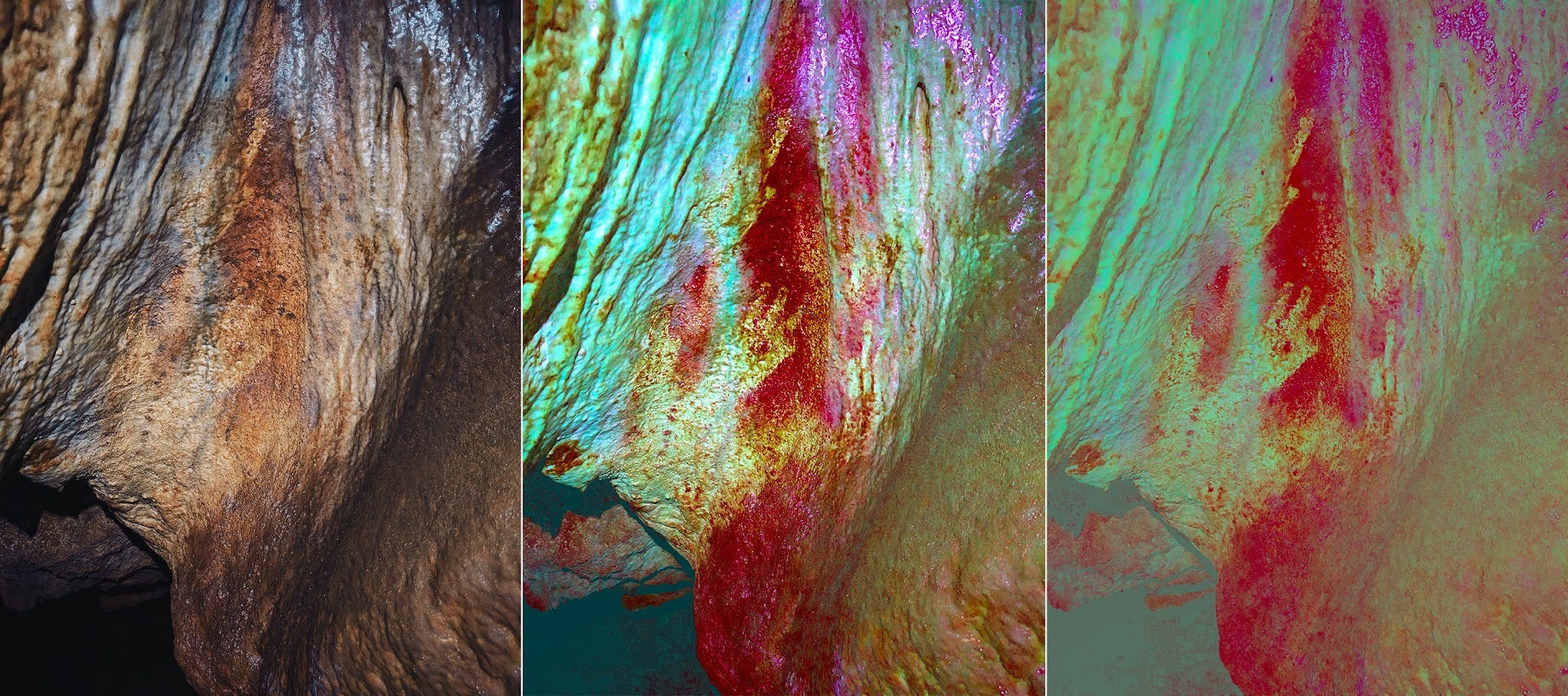
At La Pasiega (Cantabria), a red scalariform (ladder-like) sign was dated. At Ardales (Málaga), a series of red painted stalactite formations in the Galería de las Columnas was analyzed. Both sites feature complex, deep-cave topographies where early hominins had to navigate hundreds of meters into total darkness, utilizing portable fuel lamps, to place non-figurative marks on specific, visually prominent speleothems.
Bacon Hole (Gower Peninsula, South Wales)
Expanding the team’s reach to the far northwestern edge of the Pleistocene world, Bacon Hole represents an astonishing success for the team. Led by Dr. George Nash, the team’s British operations recently confirmed that the red diagonal bands painted on the cave walls at Bacon Hole represent the oldest cave art in Britain, dated to approximately 17,100 years ago. This discovery anchors the team’s research on the Atlantic facade, demonstrating that early symbolic marking behaviors were not a localized Mediterranean phenomenon but extended to the extreme edge of the northwestern European continent.
Deep-Dive on Key Figures: The Interdisciplinary Pillars
The true genius of the First Art Team lies in its radical rejection of academic silos. By combining geology, chemistry, and cognitive archaeology, the team turns cold stone into a living history of the mind. Two researchers perfectly embody this complementary, high-tech approach: Dr. Hugo Gomes and Dr. George Nash.
Dr. Hugo Gomes: Decoding the Chemistry of Prehistoric Paint
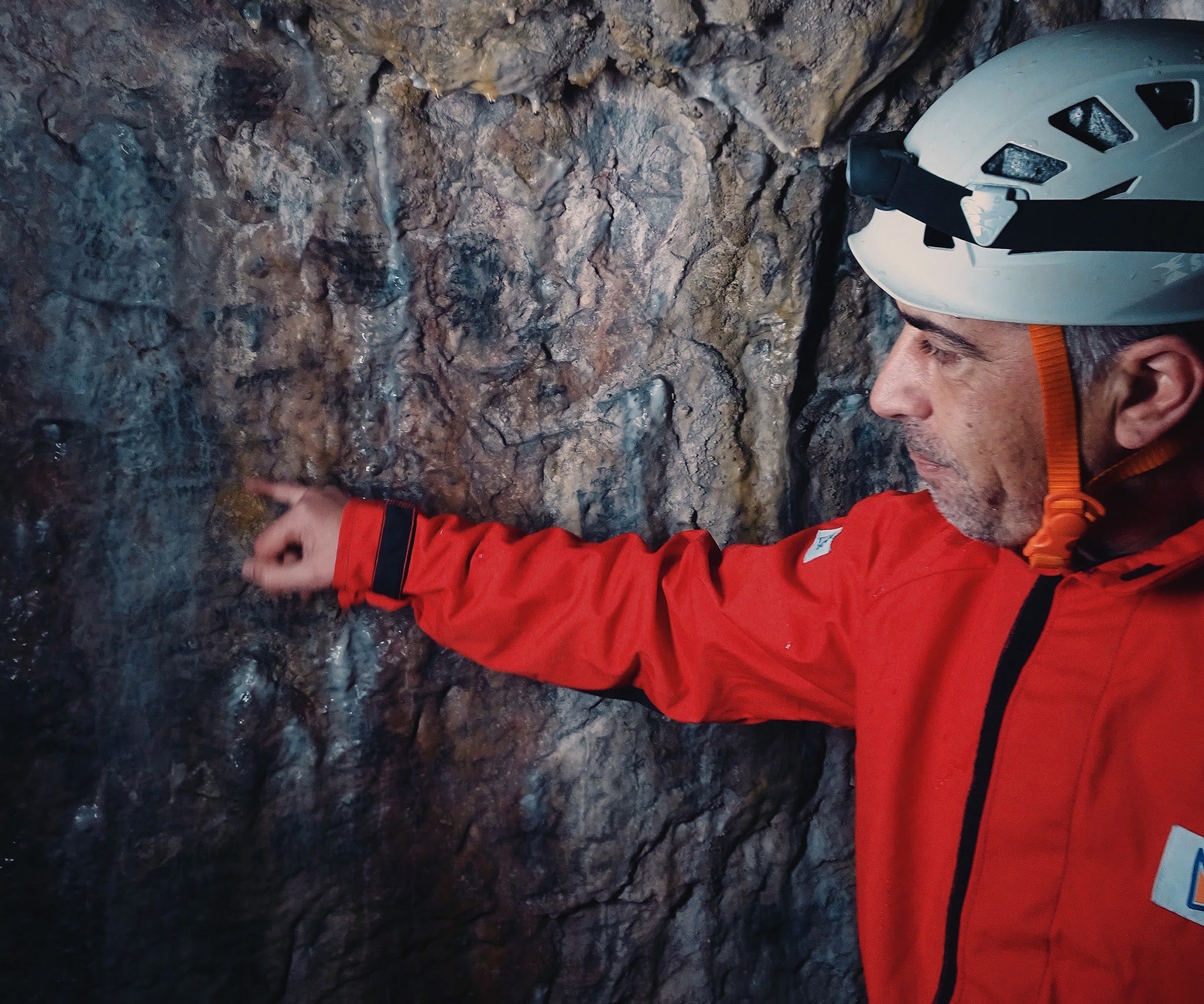
Operating out of the Geosciences Centre of Coimbra University and the Polytechnic Institute of Tomar, Dr. Hugo Gomes acts as the team’s chief geochemical detective. His research moves the study of Paleolithic art away from subjective stylistic interpretation and into the realm of molecular physics.
Gomes specializes in pigment characterization and raw material provenance. Using a combination of non-destructive analytical techniques—specifically Fourier-Transform Infrared Spectroscopy (FTIR), Raman Spectroscopy, and X-ray Diffraction (XRD)—Gomes isolates the mineralogical phases of the red ochre and black manganese pigments.
His work is not merely about identifying what the paint is made of, but understanding the pigment recipe (the chaîne opératoire of pigment production). He analyzes the grain size distribution, the ratio of clay minerals to pure iron oxides (such as hematite), and the presence of organic or mineral binders. This level of detail allows Gomes to:
Trace Sourcing Networks: By comparing the chemical “fingerprint” of pigments used on cave walls with local and regional geological outcrops, Gomes can determine if early artists sourced their materials directly outside the cave mouth or transported them over tens of kilometers.
Identify Behavioral Standardization: If pigments in different chambers of a cave system share an identical, highly specific mineral recipe, it proves that the artists were operating under shared, culturally transmitted technological standards.
Assess Planning Depth: The deliberate selection of specific clays or mineral extenders to adjust the viscosity and durability of the paint reveals a sophisticated understanding of material properties, directly challenging the notion of primitive Neanderthal simplicity.
Dr. George Nash: The Phenomenology of the Sacred Landscape
If Hugo Gomes decodes the microscopic reality of the paint, my advisor Dr. George Nash reconstructs the macroscopic universe of the artist. Affiliated primarily with Liverpool John Moores University and operating as a senior researcher at the Geosciences Centre of Coimbra, Nash is a preeminent landscape archaeologist whose work focuses on the spatial and social contexts of Paleolithic art.
Nash champions a phenomenological approach to archaeology. He argues that caves are not random containers of symbols, but highly deliberate visual and geographic monuments. His work analyzes how hunter-gatherers experienced their environment, focusing on:
Visual Axes and Viewshed Analysis: Nash reconstructs how a cave opening would have appeared to individuals moving across the Pleistocene landscape. In coastal environments like the Gower Peninsula, he maps the relationship between cave entrances, sea level fluctuations, seasonal game migration paths, and raw material sources.
Bacon Hole and the Gower Facade: Nash’s leadership at Bacon Hole, South Wales, resulted in the monumental confirmation of Britain’s oldest rock art. By placing these red diagonal bands (dated to 17,100 years ago) within a wider landscape-scale framework, Nash demonstrated that early artists used these coastal caves as geographic and spiritual landmarks. The art at Bacon Hole acted as an anchor, marking a critical transition zone between the terrestrial hunting grounds of the Gower and the now-submerged marine landscapes of the Bristol Channel.
Deep-Cave Spatial Psychology: Nash analyzes the transition from the light-drenched “profane” areas of the cave mouth to the dark, sensory-deprived “sacred” chambers deep underground. He maps how non-figurative signs are placed in relation to natural acoustic hot spots, tactile rock formations, and dangerous topographic drops, showing that the placement of art was a highly structured, ritualized process.
Method: The High-Tech Toolkit of Modern Rock Art Science
To drag Paleolithic art out of the subjective realm of stylistic analysis and into the objective light of hard science, the First Art Team employs a highly sophisticated, non-destructive analytical workflow. Rather than relying on outdated “visual typologies,” they treat the rock surface as a complex, dynamic geological and chemical archive.
Uranium-Series (U-Th) Dating of Carbonate Crusts
The core chronological weapon of the team is Uranium-Series dating, specifically applied to thin layers of calcium carbonate (CaCO3) that have grown either directly over or underneath paint layers.
The physical principle is elegant: natural waters contain trace amounts of dissolved Uranium-238, which decays through a known chain into Thorium-230. Because Uranium is highly water-soluble but Thorium is completely insoluble, newly precipitated calcite crusts on cave walls contain trace amounts of Uranium but absolutely zero Thorium. Once the calcite crystallizes, the system becomes “closed,” and the radioisotopic clock starts ticking. Thorium-230 slowly accumulates in the crystal lattice through radioactive decay. By measuring the ratio of Uranium-238 to Thorium-230 using high-precision mass spectrometry, scientists can determine exactly how much time has elapsed since the calcite layer formed.
To minimize damage to these priceless cultural resources, the team uses micro-extraction protocols. Using a surgical scalpel or a micro-drill under high magnification, they extract samples weighing only a few milligrams. These are then analyzed using Laser Ablation Inductively Coupled Plasma Mass Spectrometry (LA-ICP-MS) at partner laboratories, such as Nanjing Normal University under Dr. Qingfeng Shao.
By employing a “sandwich” sampling strategy—dating calcite layers both beneath the pigment (providing a maximum age, or terminus post quem) and calcite layers growing directly on top of the pigment (providing a minimum age, or terminus ante quem)—they can bracket the creation of the art with absolute geochronological certainty.)
Pigment Characterization: SEM-EDX, FTIR, and GC-MS
The red and black pigments themselves are subjected to intense chemical scrutiny to understand the “chaîne opératoire” (the chain of operational gestures) of pigment preparation.
SEM-EDX (Scanning Element Analysis): This technique allows the team to map the elemental composition of micro-samples at the sub-micron scale. It reveals whether the artists were using pure, naturally occurring iron oxides (such as hematite) or if they were deliberately mixing them with specific mineral extenders, such as manganese oxides, clays, or aluminosilicates, to alter the viscosity, durability, or hue of the paint.
FTIR (Fourier-Transform Infrared Spectroscopy): Used to identify the molecular structure of both the mineral phases and potential organic binders.
GC-MS (Gas Chromatography-Mass Spectrometry): Utilized to detect trace organic compounds. In open-air rock shelters or well-ventilated caves, artists occasionally mixed pigments with organic binders such as animal fats, plant resins, or even saliva. GC-MS can identify these fatty acid profiles, providing deep insights into the recipe of the ancient paint.
3D Photogrammetry, D-Stretch, and Spatial Analysis
The visual capture of the art is led by my advisor Dr. Sara Garcés and Virginia Lattao, utilizing state-of-the-art non-contact digital recording.
Using high-resolution DSLR cameras with polarized lenses, they capture hundreds of overlapping photos of a decorated panel from varying angles. These photos are processed using structure-from-motion (SfM) photogrammetry software to generate highly accurate, sub-millimeter 3D mesh models of the cave walls.
These 3D models are then analyzed using D-Stretch, a digital imaging tool originally developed for NASA that uses decorrelation stretch algorithms to enhance extremely faint, faded color differences on rock surfaces. This allows the team to visualize painted details that are completely invisible to the naked human eye under standard cave lighting.
Furthermore, by integrating these 3D models into Geographic Information Systems (GIS), the team can analyze the precise spatial distribution of the art in relation to cave topography, acoustic properties, and ancient lines of sight.
Data: The Chemical and Chronological Footprints of the First Artists
The analytical datasets compiled by the First Art Team across their key sites represent some of the most robust, hard-won empirical evidence in modern Paleolithic archaeology. Below, we break down the critical geochronological and geochemical datasets that have redefined our understanding of early hominin symbolic capabilities.
Speleothem Dating Results
The geochronological bombshells of the team’s research are summarized in the table below, showcasing the minimum ages obtained from calcite crusts overlying non-figurative art across three major Spanish caves.
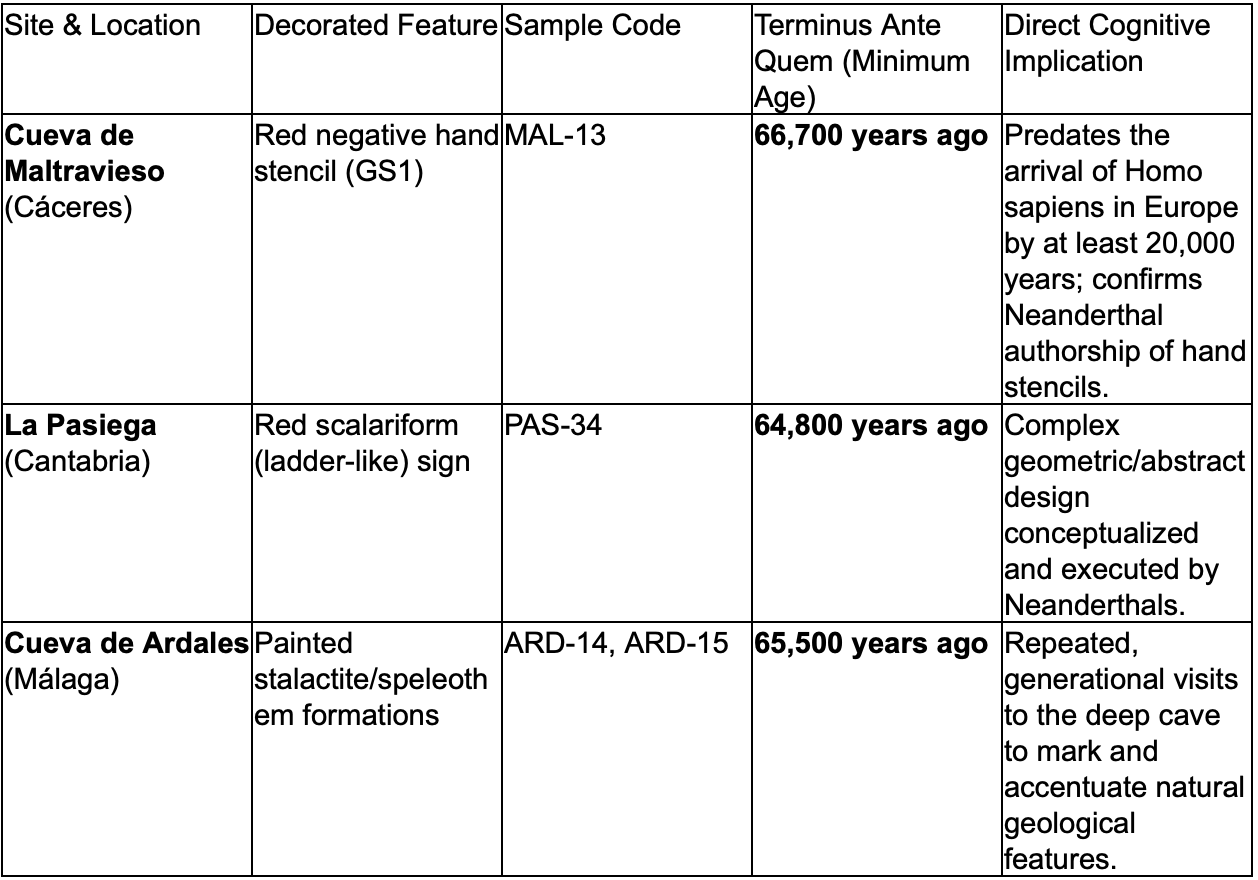
Repeated, generational visits to the deep cave to mark and accentuate natural geological features.
These dates do not represent single, isolated anomalies. At Ardales, the team dated multiple layers of calcite within the same speleothem columns. The results revealed a staggering chronological depth: the painting events did not occur during a single, brief visit, but were repeated over thousands of years. For instance, some layers yielded ages around 65,000 years, while others, higher up the same flowstone, were dated to roughly 45,000 years ago. This indicates a deeply entrenched, generational tradition of returning to the exact same subterranean spot to apply red pigment—a behaviors pattern indicating long-term cultural transmission across Neanderthal populations.
Pigment Fingerprinting and Mineral Recipes
At Cueva de Maltravieso, geochemical analysis of the red pigments used for the hand stencils has yielded fascinating data. Under the direction of Dr. Carmela Vaccaro (University of Ferrara), micro-spectroscopic analysis of the red paints revealed a highly specific mineral signature:
Mineralogy: The pigment is composed of fine-grained hematite (Fe2O3) associated with minor quantities of quartz, potassium-rich clays, and trace amounts of titanium and manganese.
Recipe Consistency: The elemental ratios of Iron to Titanium (Fe/Ti) and Iron to Manganese (Fe/Mn) remain highly consistent across different hand stencils located in separate chambers of the cave. This chemical “fingerprint” suggests that the artists were either utilizing a single, highly specific geological source of ochre located outside the cave or were carefully processing and mixing their pigments according to a standardized, culturally transmitted “recipe.”
Application Technique: Close-up 3D photogrammetric analysis of the stencil edges reveals a complete absence of brush strokes or tool marks. Instead, the pigment exhibits a characteristic “splatter” pattern, consisting of microscopic droplets concentrated heavily in the spaces between the fingers. This is definitive physical proof of a blowing technique, wherein the artist placed their hand flat against the damp limestone wall and used their mouth (or a hollow bone/reed tube) to blow a liquefied mixture of ochre and water across the hand, leaving a sharp, negative silhouette.
Paleogenomics and the Cave Dirt Archive
In collaboration with Matthias Meyer and Alba Bossom of the Max Planck Institute for Evolutionary Anthropology, the team has been piloting revolutionary paleogenomic techniques.
Instead of relying on rare, highly fragmented fossil bones, the team has attempted to extract ancient mitochondrial and nuclear DNA directly from the cave sediments and the mineral pigment layers themselves. At sites like Maltravieso and Escoural, this “dirt DNA” may reveal the presence of Neanderthal genomic signatures in the exact stratigraphic layers associated with the early pigment use. This would provide an independent, biological line of evidence that directly matches the geochronological dates, placing Neanderthals at the scene of the artistic creation.
We are patiently awaiting the publication of this paper!
Proposing a Path Forward: Cognitive Geography and My Thesis Roadmap
While the First Art Team’s empirical datasets are unparalleled, the ultimate challenge of modern paleoanthropology lies in interpreting why and how these marks were made. The traditional debate has stagnated around whether Neanderthals possessed the cognitive “hardware” to engage in symbolism. The geochronological dates provided by Hoffmann et al. (2018) have settled that question. Now, we must ask: How can we scientifically isolate deliberate symbolic acts from background noise, and what do their spatial distributions tell us about Neanderthal landscapes?
This is the exact research frontier of my Master’s thesis, titled: “The Neanderthal Arc: A Pan-Eurasian Evaluative Framework of Symbolic Capacity from Origins to the Iberian Refugium.” Under the mentorship of my co-advisors Dr. Sara Garcés and Dr. George Nash, my work builds a rigorous, quantitative bridge between raw site data and cognitive evolutionary theory. Rather than writing a passive literature review, my project constructs an Evaluative Framework that actively addresses advisor-led challenges, preparing a direct transition engine for my future PhD.
Significance: Dismantling the Cognitive Monopoly
The implications of the First Art Team’s research extend far beyond the borders of the Iberian Peninsula; they strike at the very heart of how we define humanity. For over a century, our evolutionary narratives have been built upon a foundation of Western, anthropocentric exceptionalism. We defined our species, Homo sapiens, by our unique cognitive superiority, using “art” as the ultimate, unassailable proof of our special status.
By demonstrating that Neanderthals were creating sophisticated, abstract, and monumental cave art at least 64,000 to 66,000 years ago, the First Art Team has shattered this paradigm.
The Global Hominin Cognitive Revolution
This re-evaluation of the deep mind is not isolated to Europe. The team’s work connects beautifully with ongoing global debates on early hominin symbol-making. For instance, the highly contested discoveries at Rising Star Cave in South Africa, where researchers have argued that the small-brained hominin Homo naledi engraved geometric patterns on the limestone walls of their deep cave chambers (carved into the Malmani Dolomites), point to a parallel cognitive revolution.
Whether we look at Neanderthals in Iberia or Homo naledi in South Africa, the traditional claim that symbolic expression requires the specific cranial capacity of modern Homo sapiens is collapsing. Symbolic marking of the landscape was a shared potentiality across multiple branches of our evolutionary tree.
The Graphic Codes of Ice Age Europe
This is where the work of Genevieve von Petzinger becomes incredibly vital. By mapping and cataloging the geometric signs across Ice Age Europe, von Petzinger proved that two-thirds of all Paleolithic art does not consist of grand, sweeping animal drawings, but rather of a highly structured, recurring system of thirty-two geometric signs. These signs—including chevrons, dots, lines, tectiforms, and unciforms—represent a continent-wide graphic communication system.
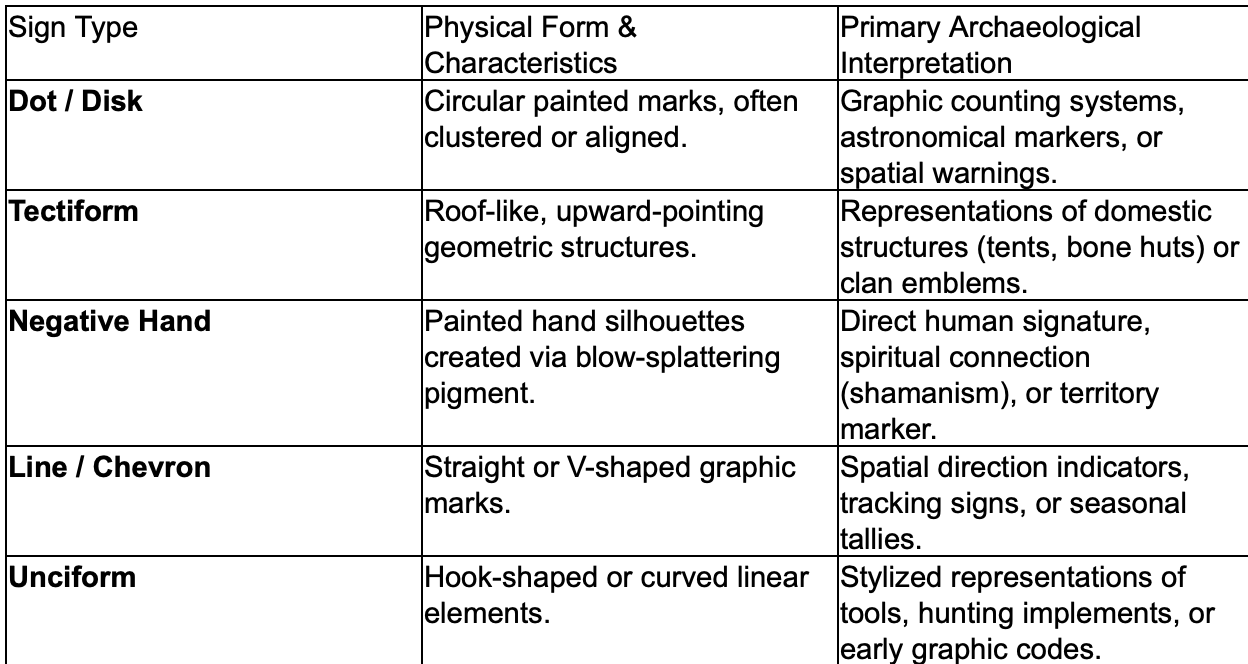
The First Art Team’s work shows that this structured sign use was not invented by Homo sapiens but had its roots deep in the Neanderthal Middle Paleolithic, where lines, dots, and negative hands were already being used to highlight meaning on cave walls.
Meet the Innovators: Biographies of the First Art Team
This profound paradigm shift is only possible because of the unique, collaborative structure of the First Art Team. Below are the key scientific minds behind this international collective:
Dr. Hipólito Collado Giraldo (Spain)
As the lead archaeologist of the Junta de Extremadura and a senior researcher at the Geosciences Centre of Coimbra University, Dr. Hipólito Collado Giraldo provides the administrative vision, management, and field leadership for the FIRST-ART project. He has spent decades documenting and protecting the rich archaeological heritage of Extremadura, including Cueva de Maltravieso. Dr. Collado Giraldo is the principal investigator of the Handpas Project, a massive, open-access global database cataloging Paleolithic hand stencils. His expertise lies in coordinating regional field surveys, managing endangered archaeological heritage, and tracing the macro-distribution of rock art panels across Southwestern Europe.
Dr. José Julio García Arranz (Spain)
Operating from the University of Extremadura, Dr. José Julio García Arranz is the team’s foremost authority on visual culture and prehistoric iconography. He specializes in post-Paleolithic and Paleolithic rock art, analyzing how non-figurative and figurative designs acted as early social communication systems. Dr. García Arranz’s work focuses on the symbolic, social, and structural interpretation of graphic codes, deciphering how ancient groups constructed regional identities and territory markers on stone.
Dr. Sara Garcés (Portugal)
A primary researcher at the Geosciences Centre of Coimbra University and the Polytechnic Institute of Tomar, Dr. Sara Garcés is the team’s co-lead for advanced digital recording. She is also my Master’s thesis co-advisor. Dr. Garcés specializes in high-resolution non-contact 3D photogrammetry and D-Stretch color-decorrelation processing. Her work focuses on preserving highly fragile and degraded rock art surfaces, developing non-destructive methods to record prehistoric panels in sub-millimeter detail, and analyzing the precise micro-topographical placement of ancient paints.
Dr. George Nash (United Kingdom)
Affiliated with Liverpool John Moores University and operating as a senior researcher at the Geosciences Centre of Coimbra, Dr. George Nash is my Master’s thesis co-advisor. Dr. Nash is a world-renowned expert in landscape archaeology and rock art phenomenology. He directs the team’s operations across the Atlantic facade, famously leading the field investigations that confirmed the red diagonal bands at Bacon Hole, South Wales, as the oldest rock art in Britain. His work explores how prehistoric hunter-gatherers experienced, structured, and mythologized their physical environments, transforming natural landscapes into sacred, socially coded places.
Dr. Hugo Gomes (Portugal)
Based at the Polytechnic Institute of Tomar and the Geosciences Centre of Coimbra, Dr. Hugo Gomes is the team’s chief geochemistry detective. Dr. Gomes specializes in pigment characterization and raw material provenance studies. Using advanced, non-destructive analytical techniques such as Raman Spectroscopy, X-ray Diffraction (XRD), and Fourier-Transform Infrared Spectroscopy (FTIR), he decodes the molecular structures of prehistoric pigments, mapping the sourcing, processing, and cultural transmission of ancient paint recipes.
Prof. Pierluigi Rosina (Portugal/Italy)
An Associate Professor at the Polytechnic Institute of Tomar and senior researcher with the Geosciences Centre of Coimbra, Prof. Pierluigi Rosina is a veteran geoarchaeologist. His research focuses on the reconstruction of Quaternary paleoenvironments, karst stratigraphy, and site formation processes. Within the team, Prof. Rosina integrates geoarchaeological observations with pigment analysis, ensuring that the geochronological and geochemical contexts of cave art sites are robustly correlated with regional environmental, climatic, and geological records.
Dr. Carmela Vaccaro (Italy)
A senior researcher at the University of Ferrara, Dr. Carmela Vaccaro leads the high-precision geochemical fingerprinting of prehistoric ochres. Dr. Vaccaro utilizes advanced spectroscopic and elemental analysis, including Scanning Electron Microscopy with Energy Dispersive X-ray Spectroscopy (SEM-EDX) and portable X-ray Fluorescence (pXRF). Her work focuses on trace-element sourcing, identifying the specific geological origins of mineral pigments and reconstructing early trade and travel networks across Western Europe.
Virginia Lattao (Portugal)
Operating out of the Geosciences Centre of Coimbra University, Virginia Lattao is a key technical pillar of the team’s digital preservation efforts. Working alongside Dr. Sara Garcés, Lattao specializes in digital documentation, spatial recording, and 3D modeling of rock art sites. Her technical expertise ensures that fragile open-air and deep-cave panels are accurately mapped, providing the prised spatial data used for spatial point pattern analyses and 3D terrain models.
Genevieve von Petzinger (Canada)
Collaborating with the team’s international cohort, Genevieve von Petzinger is a prominent paleoanthropologist and author associated with the University of Victoria and the Bradshaw Foundation. Her landmark research established a comprehensive global database cataloging the non-figurative geometric signs of Ice Age Europe. By identifying a highly structured, recurring system of thirty-two geometric signs, her work provides the critical theoretical and typological framework used to study early graphic codes and the evolution of human communication.
Dr. Qingfeng Shao (China)
Dr. Qingfeng Shao is a geochronologist based at Nanjing Normal University. He specializes in high-precision Uranium-Series (U-Th) dating of speleothem carbonates using multi-collector inductively coupled plasma mass spectrometry (MC-ICP-MS). Within the team, Dr. Shao provides the absolute geochronological dates, running the ultra-precise, micro-sampling dating protocols that established the Neanderthal antiquity of rock art at Ardales and Maltravieso.
Matthias Meyer and Alba Bossom (Germany)
Based at the Max Planck Institute for Evolutionary Anthropology in Leipzig, Matthias Meyer and Alba Bossom are world-class experts in paleogenomics. They specialize in extracting ancient mitochondrial and nuclear DNA directly from cave sediments and mineral pigment layers without requiring skeletal fossil remains. Their revolutionary “dirt DNA” protocols provide the team with direct genetic confirmation of hominin occupancy at early art sites, anchoring biological lineages with geochronological dates.
Critique: Addressing the Skeptics and Navigating Taphonomic Biases
No revolutionary scientific claim is ever accepted without fierce resistance, and the work of the First Art Team has been subjected to intense, often aggressive, academic skepticism. The primary criticisms, spearheaded by researchers such as Pons-Branchu et al. (2020), center on the reliability of the Uranium-Series dating method when applied to thin, porous cave calcites.
The Leaching Dilemma: Open vs. Closed Systems
The core technical objection is the “leaching argument.” Skeptics argue that cave walls are highly dynamic environments characterized by constant water flow, high humidity, and changing chemical conditions.
If groundwater percolates through a thin calcite crust, it can selectively dissolve and wash away (leach) the Uranium-238, which is highly water-soluble. However, the Thorium-230, being insoluble, remains trapped in the calcite matrix.
This loss of Uranium artificially decreases the ratio of Uranium-238 to Thorium-230. When analyzed in the mass spectrometer, this altered ratio will yield a calculated age that is far older than the actual, physical formation of the calcite. Therefore, critics claim that the ~65,000-year dates are simply the result of open-system Uranium leaching, and that the art is actually much younger, falling comfortably within the modern human era.
The First Art Team has countered this criticism with exemplary methodological rigor:
Micro-Stratigraphic Sub-Sampling: Instead of analyzing a calcite crust as a single, homogenous block, they slice the sample along its growth axis into ultra-thin, sub-millimeter sub-samples. By dating these individual layers sequentially, they can check for “stratigraphic consistency.” If Uranium leaching had occurred, the sequential dates would be chaotic and inverted. Instead, the team’s data consistently shows a perfect, sequential progression of ages from the oldest (innermost layer) to the youngest (outermost layer), proving the system remained closed.
Uranium Concentration Profiling: The team measures the absolute concentration of Uranium across the sample. If leaching had occurred, there would be localized zones of extreme depletion near the outer surfaces exposed to water. The lack of such zones in their analyzed samples provides robust empirical proof against widespread leaching.
The “Natural Pigment” Argument
A second critique suggests that the red marks at Ardales and Maltravieso are not human art at all, but are instead natural geological staining caused by iron-rich water dripping from the cave ceiling or the activities of cave-dwelling animals (such as bears scratching the walls with muddy claws).
The team’s geochemical and microscopic analysis has completely put this argument to rest:
Microscopic Examination: SEM analysis of the Maltravieso stencils reveals that the hematite grains are highly sorted and exhibit angular, fractured shapes characteristic of deliberate mechanical crushing and grinding, rather than the smooth, rounded, water-worn shapes of naturally deposited alluvial clays.
Organic Signatures: The detection of specific mineral extenders and trace organic binders in the pigments at several sites confirms that these marks are the result of deliberate, complex chemical recipes prepared by hominin hands, not natural geological accidents.
10. Full Bibliography
Arsuaga, J. L., Martínez, I., Arnold, L. J., Aranburu, A., Gracia-Téllez, A., Sharp, W. D., Quam, R. M., Falguères, C., Pantoja-Pérez, A., Bischoff, J., Poza-Rey, E., Parés, J. M., Carretero, J. M., Demuro, M., Lorenzo, C., Sala, N., Martinón-Torres, M., García, N., Alcázar de Velasco, A., Cuenca-Bescós, G., Gómez-Olivencia, A., Moreno, D., Pablos, A., Shen, C. C., Barrio, L., Ruiz, S., Ortega, A. I., Santos, R., Bermúdez de Castro, J. M., & Carbonell, E. (2014). Neandertal roots: Cranial and chronological evidence from Sima de los Huesos. Science, 344(6190), 1358-1363.
Baquedano, E., Arsuaga, J. L., Pérez-González, A., Laplana, C., Márquez, B., Huguet, R., Gómez-Soler, S., Villaescusa, L., Galindo-Pellicena, M. Á., Rodríguez, L., García-González, R., Ortega, M. C., Martín-Perea, D. M., Ortega, A. I., Hernández-Vivanco, L., Ruiz-Liso, A., Alonso-Martín, J. I., Abrunhosa, A., Moclán, A., Casado, A. I., Vegara-Riquelme, M., Álvarez-Fernández, A., Domínguez-García, Á. C., Álvarez-Lao, D. J., García, N., Sevilla, P., Blain, H. A., Ruiz-Zapata, B., Gil-García, M. J., Álvarez-Vena, A., Sanz, T., Quam, R., & Higham, T. (2023). A symbolic Neanderthal accumulation of large herbivore crania. Nature Human Behaviour, 7(7), 114-122.
Collado Giraldo, H. (2020). Handpas: Theoretical and Methodological Bases for the Study of Paleolithic Hand Stencils. Junta de Extremadura, Mérida.
Fajardo Bernal, S. D., Kozowyk, P. R. B., & Langejans, G. H. J. (2024). Reply to: problems with two recent Petri net analyses of Neanderthal adhesive technology. Scientific Reports, 14, 10234.
Garcés, S., Gomes, H., Rosina, P., & Lattao, V. (2021). High-definition digital recording and non-invasive analysis of post-Paleolithic rock art in the Iberian Peninsula. Journal of Archaeological Science: Reports, 36, 102804.
García Arranz, J. J., & Collado Giraldo, H. (2018). Hand stencils in the rock art of the Iberian Peninsula: A review of technological and symbolic aspects. Quaternary International, 472, 192-205.
Herrera Malatesta, E., & de Valeriola, S. (2024). Ambiguous landscapes: A framework for assessing robustness and uncertainties in archaeological point pattern analysis. PLoS ONE, 19(9), e0307743.
Hoffmann, D. L., Standish, C. D., García-Diez, M., Pettitt, P. B., Milton, J. A., Zilhão, J., Alcolea-González, J. J., Cantalejo-Duarte, P., Collado, H., de Balbín-Behrmann, R., Lorblanchet, M., Ramos-Muñoz, J., Weniger, G.-C., & Pike, A. W. G. (2018). U-Th dating of carbonate crusts reveals Neandertal origin of Iberian cave art. Science, 359(6378), 912-915.
Jaubert, J., Verheyden, S., Genty, D., Soulier, M., Cheng, H., Blamart, D., Burlet, C., Camus, H., Delaby, S., Deldicque, D., Edwards, R. L., Ferrier, C., Lignereux, P., Lütgert, H., Mazo, G., Michel, V., Nespoulet, F., Santos, F., Sirocko, F., Ferrier, J. B., & Bourdier, C. (2016). Early Neanderthal constructions deep in Bruniquel Cave in southwestern France. Nature, 534(7605), 111-114.
Lattao, V., Gomes, H., Rosina, P., Garcés, S., Arranz, J. J. G., & Giraldo, H. C. (2023). O projeto FIRST-ART: documentação, conservação e gestão das primeiras manifestações da arte rupestre no sudoeste da Península Ibérica. As Grutas de Escoural e Maltravieso. Boletim do Centro de Pré-História de Mação, 5, 23-41.
Marquet, J. C., Freiesleben, T., Thomsen, K. J., Murray, A. S., Robert, E., Lorblanchet, M., Aubry, T., Guillaud, E., Guérin, G., Heydari, M., Jollivet, J. C., Lorin, T., Macaire, J. J., Oberlin, C., Valla, F., & d’Errico, F. (2023). The earliest unambiguous Neanderthal engravings on cave walls: La Roche-Cotard, Loire Valley, France. PLoS ONE, 18(6), e0286568.
Nash, G., & Garwood, P. (2022). Monumentalizing the shoreline: The symbolic landscape of Bacon Hole and the Gower Peninsula during the Late Pleistocene. Archaeology in Wales, 61, 12-25.
Pons-Branchu, E., Sanchidrián, J. L., Fontugne, M., Medina-Alcaide, S., Valladas, H., & Quiles, A. (2020). U-series dating of carbonate crusts associated with Paleolithic rock art: Methodological evaluation and corrective strategies. Journal of Archaeological Science, 113, 105057.
Randles, R., & Finnegan, A. (2023). Guidelines for writing a systematic review. Nurse Education Today, 125, 105803.
Shao, Q., Bahain, J. J., Wang, W., & Falguères, C. (2019). High-precision U-series dating of speleothems associated with early hominin sites in Southern China and Europe. Quaternary Geochronology, 49, 114-121.
Straffon, L., & Tennie, C. (2025). Art beyond cognition: reframing Neanderthal art through social connectivity and cultural transmission. Evolutionary Human Sciences, 7, e38.
Vaccaro, C., Rosina, P., & Gomes, H. (2023). Geochemical characterization and provenance studies of prehistoric red ochres from Western Iberia using SEM-EDX and portable XRF. Archaeometry, 65(2), 345-361.
von Petzinger, G. (2016). The First Signs: Unlocking the Mysteries of the World’s Oldest Symbols. Simon & Schuster, New York.
Zilhão, J., Angelucci, D. E., Badal-García, E., d’Errico, F., Daniel, F., Dayet, L., Douka, K., Higham, T. F. G., Martínez-Sánchez, M. J., Montes-Bernárdez, R., Murcia-Mascarós, S., Pérez-Sirvent, C., Rofes, J., Santiago-Pérez, A., Souto, A. E., Las Heras, J., & Carrión, J. S. (2010). Symbolic use of marine shells and mineral pigments by Iberian Neandertals. Proceedings of the National Academy of Sciences, 107(3), 1023-1028.